

Charcuterie is huge, and no wonder, it’s a plate where finger snacks and artistic finesse harmonize in celebrational awe. Ok… they’re that not Godly, but they certainly find themselves center-stage at gatherings of all sizes, and to that sense, knowing how to arrange them well should be a priority for any hostess-with-the-mostess.
Piecing together a beautiful charcuterie board is relatively simple and is founded on the concepts of variety, color, amount, and occasion. Unless there are any food allergies or dietary restrictions tagged to your guest list, all (or most) food groups should be represented (a vegetable, a fruit, a meat, a dairy, a carbohydrate). Physically smaller dishes are an exception and can be used as supportive or side-dishes, such as a bowl of sliced fruit or a variety of sliced breads.
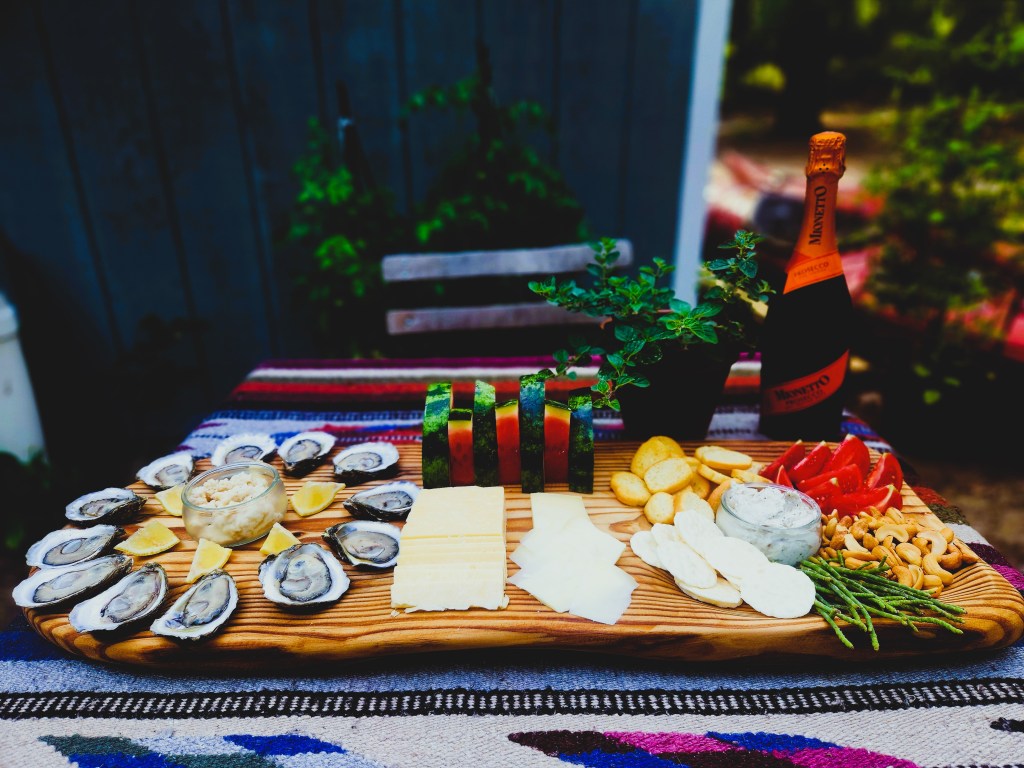
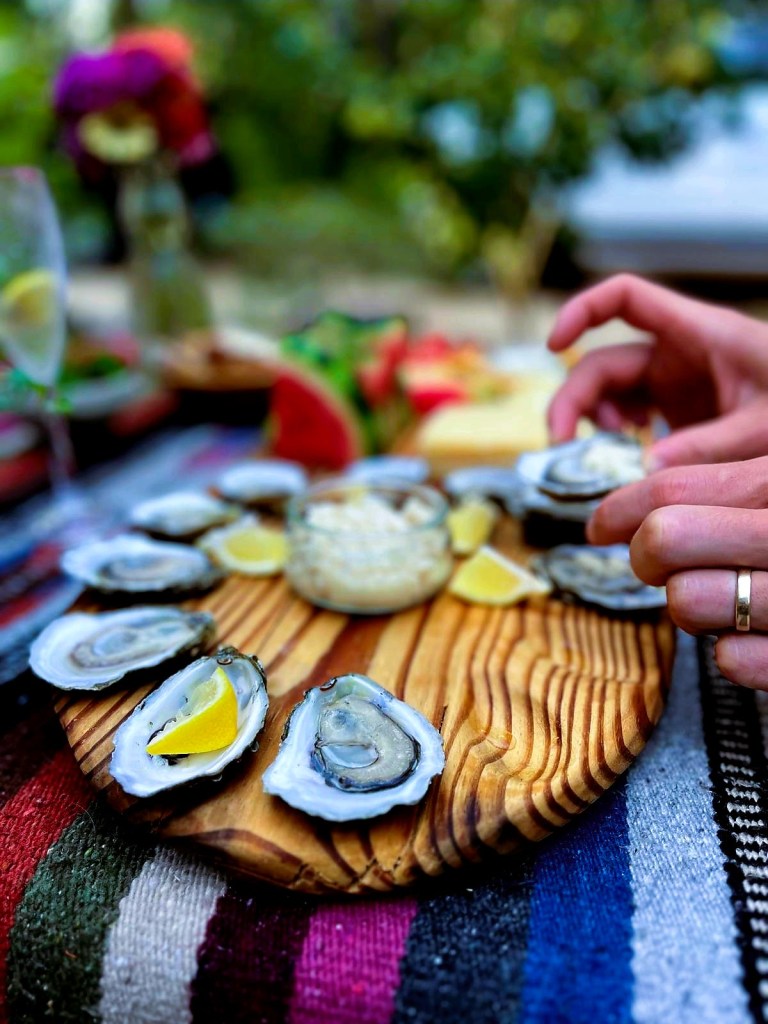
What To Consider When Gathering The Board’s Elements:
Since we’re not doing straight cheese and crackers here, there should be a balance of color and texture throughout the plate. You don’t want too much bland color, and if you find yourself inching towards that direction, you can always garnish with lemon, parsley, grapes or sliced orange.
When picking out how much to get, always overdo it, especially if you are the host. You never know what people are going to be obsessed with, and it’s important to have a full-ish board for at least the first half of your get-together.
Knowing the vibe of the occasion, the location, or at least the host, is essential. What you bring to a beach picnic is going to be hugely different than a Christmas party. You can tune into seasonal flavors and cold-versus-warmed up options when you consider the party particulars.
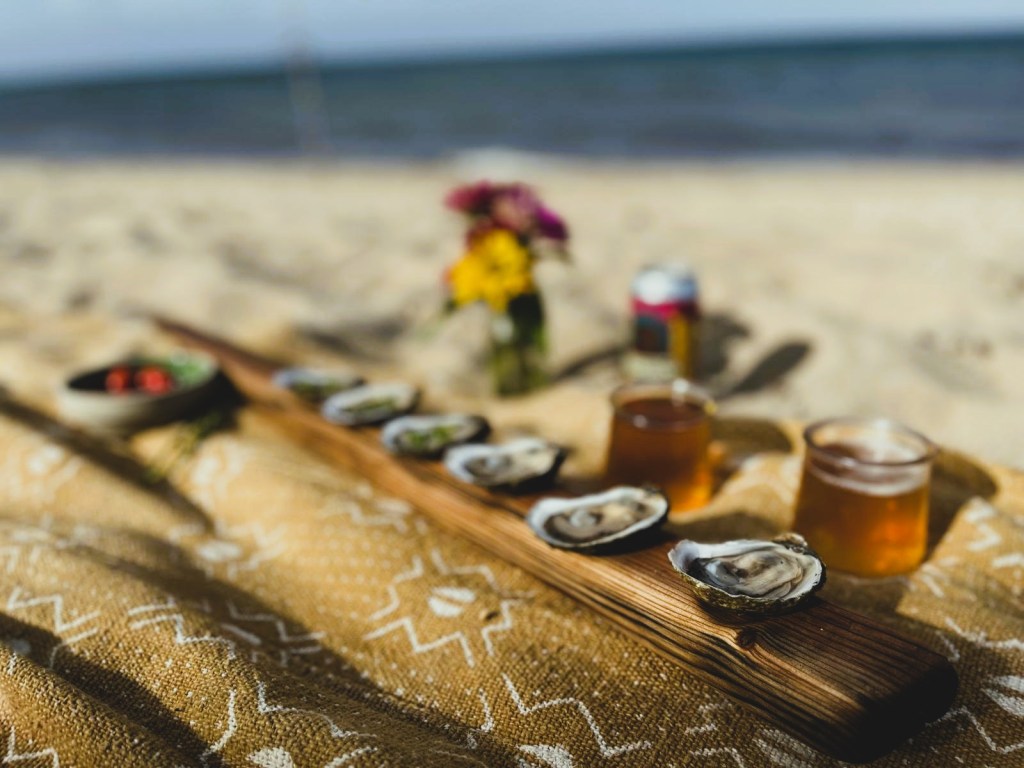
Starting to Plate the Plate
Once you have picked out what’s actually going to be on the plate, you can begin to arrange the elements. This starts with the plate itself- how big is it, what is the general shape, are there indentations for specific purposes (like an oyster plate), what is the material, etc. etc.?
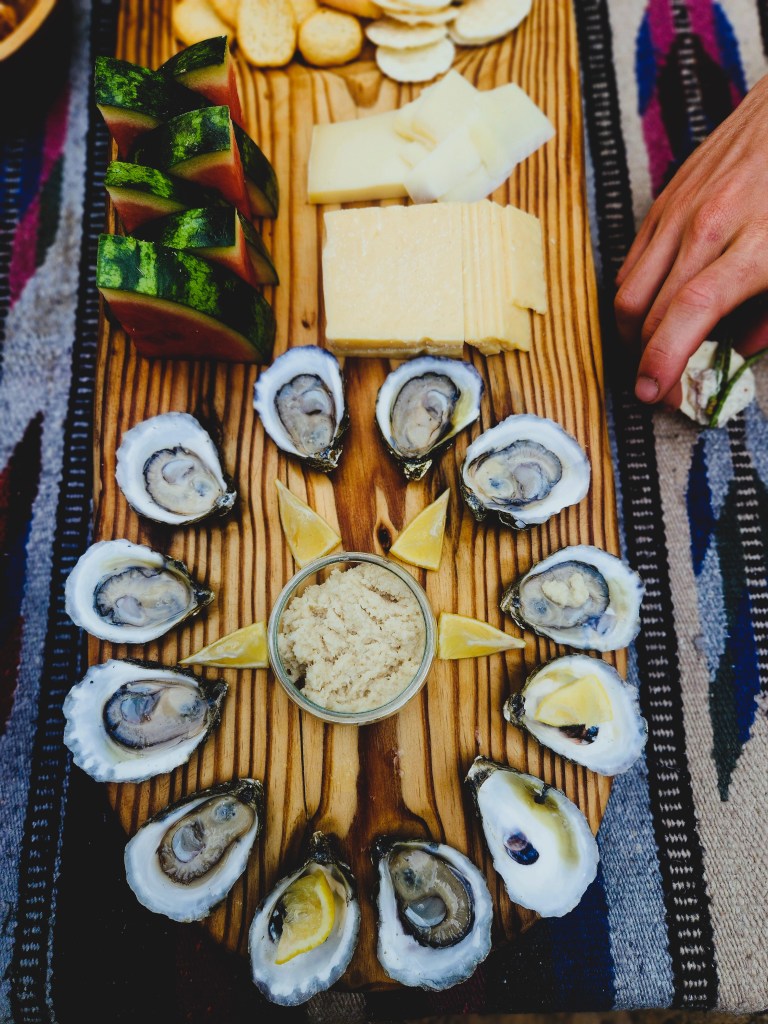
Begin arranging focal pieces first, things like stuffed mushrooms and deviled eggs are going to stand out and thus their placement should be prioritized.
Continue adding significant elements, like sliced meats and cheeses. Although these tend to be staples in a charcuterie board, they can be easily decorated with other foods and garnishes later.
Now that the key pieces are on, you can start layering things like crackers, nuts, and fruit. Be mindful of wet things (like sliced watermelon) touching other elements, because no one likes a soggy almond.
Final Touches
Take a minute to look over the product thus far. Does it need anything? Proportionately, does it seem like there is too much or too little of something? Make your final adjustments to the snacky part before garnishing and adding the final creative touches.
The last step of building a beautiful charcuterie board is to level up on detail.
This is the time to make your salami flowers to top the meat section, tuck variegated sage amongst the brie, alternate lemon wedges along a rounded plate boarder. All of these things take practice and as you continue to work your food-art magic, your plates will leave your friends oohing and awing.
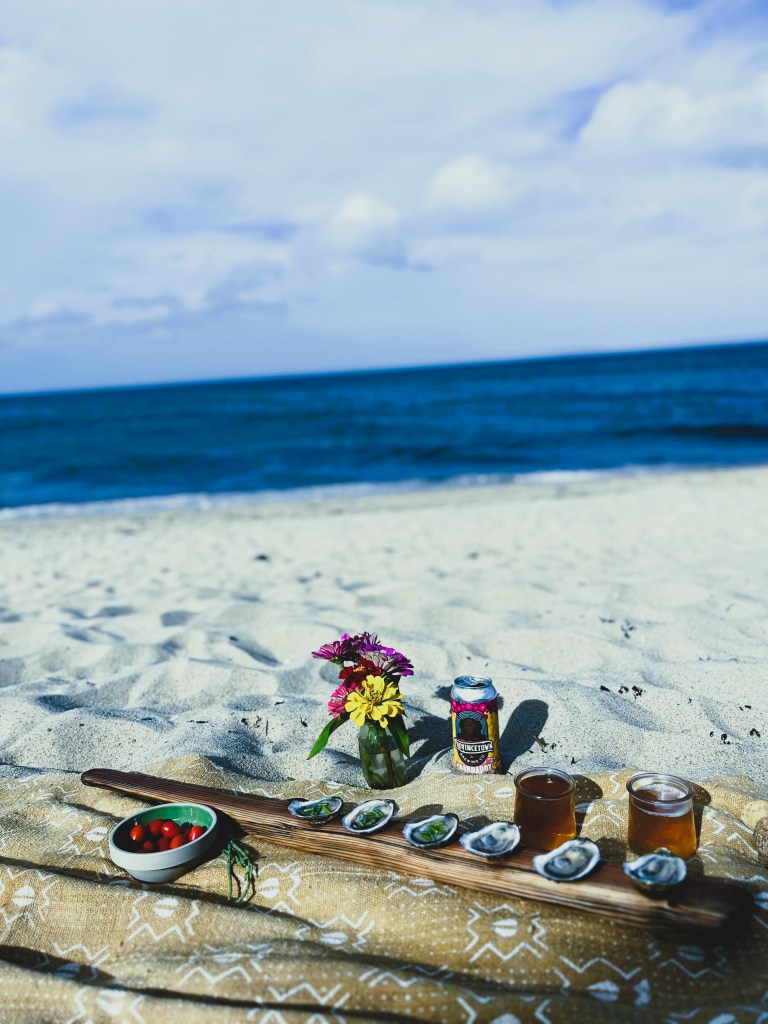
Even though bringing a gorgeous plate of food to a party isn’t life or death, it does represent to your host, or your guests, or even to yourself, the amount of appreciation you have for the occasion. The effort you put into your platters translates to the effort you put into your relationships. Whether it’s a backyard BBQ or your mother-in-law’s 70th birthday, bring grace and gratitude to the party in all forms.
 Glamping Queen